The True Cost of Container Delivery: Why Buying Direct from Felixstowe Saves East Anglian Businesses Money
Why shaving £50 on a national drop-shipper's headline price is the most expensive psychological mistake an East Anglian business can make.
Key Takeaways for East Anglian Site Managers
- The 'Headline Price' bias leads buyers to evaluate the cost of a steel box on a screen rather than the total landed cost of placing a safe, functional, watertight unit on their site.
- Most national container brokers operate on a phantom drop-shipping model: they purchase units at Felixstowe, pay a haulier to drag them to a secondary depot in the Midlands, and then charge East Anglian buyers to drag them back east.
- An 'abortive delivery' by a low-cost haulier unfamiliar with rural East Anglian road geometries routinely results in a £500–£800 wasted transport charge with zero container landed.
- Buying directly from Felixstowe sidings leverages the A14 and A12 dual-carriageway corridors, providing single-leg transport, zero intermediate depot double-handling scuffs, and verified BIC prefix fleet integrity.
1. The Tyranny of the Headline Price & The Spreadsheet Error
Human beings are hardwired to fixate on the most easily measurable number in any transaction, even when it is the least important.
In behavioural economics, this is called 'anchoring bias' combined with 'evaluability theory'. When a procurement manager, farmer, or self-storage entrepreneur is tasked with buying four shipping containers, they open three browser tabs. Tab 1 offers a container for £2,100. Tab 2 offers £2,150. Tab 3 offers £2,200.
In the rationalist's mind, the decision is self-evident: Tab 1 wins by £50 per box. The manager pats themselves on the back, logs a £200 'saving' on their spreadsheet, and issues a purchase order.
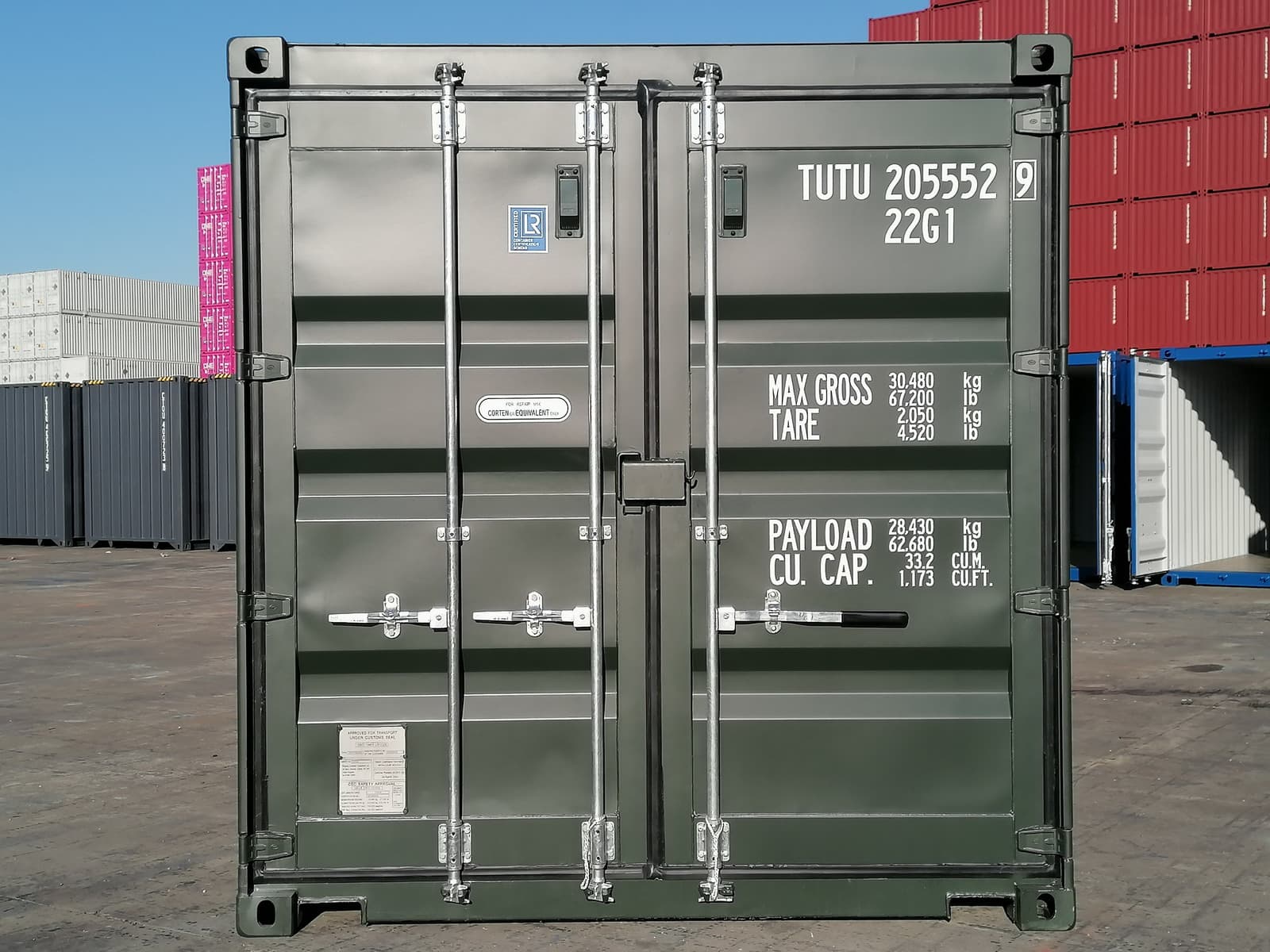
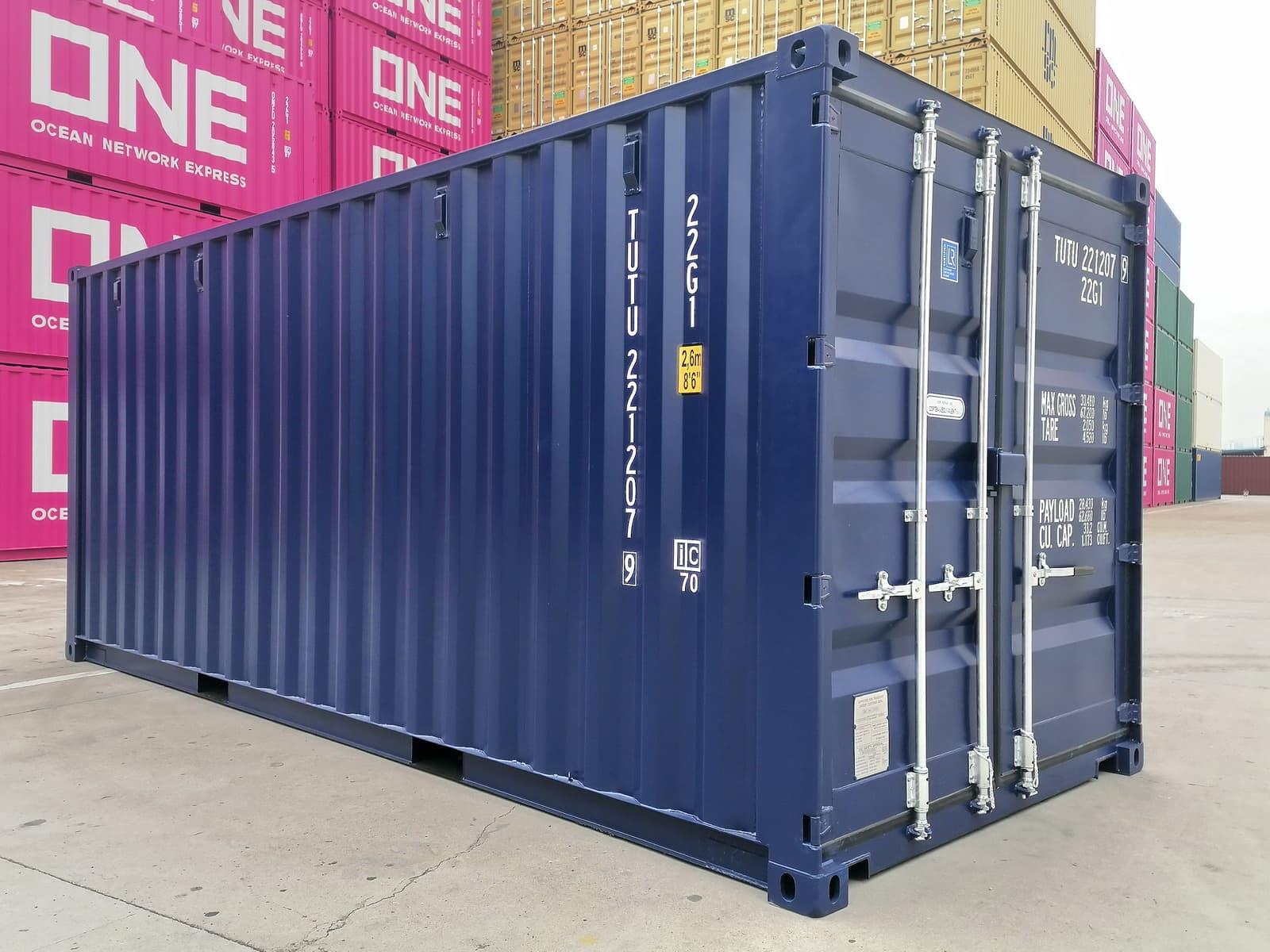
What the spreadsheet completely fails to capture is that a shipping container is not a book delivered through a letterbox by Amazon. It is an unyielding, 2.2-tonne monolith of high-tensile Corten steel measuring 20 feet in length, transported on a 32-tonne rigid or 44-tonne articulated crane lorry.
The purchase price of the box is merely the opening ante in a high-stakes logistical equation. The true cost of a shipping container is its Landed, Inspected, Operational Cost — and that is where national drop-shippers quietly fleece unsuspecting buyers.
When you buy the cheapest product on the market, you are not buying the item itself; you are buying the financial consequences of all the corners the supplier had to cut to get that price on your screen. In logistics, those consequences arrive with a pneumatic hiss at 7:00 AM on your driveway.
2. The Absurd Triangle: How Containers Travel 300 Unnecessary Miles
Where do shipping containers in the UK come from? Over 40% of all UK container traffic passes through one deep-water harbour: the Port of Felixstowe in Suffolk.
When newly manufactured One-Trip containers leave factories in Shanghai or Qingdao, they are loaded with commercial cargo and unloaded at the Felixstowe deep-water berths. They are then stacked at the port rail sidings and dockside storage yards.
Now look at how the national online container broker operates. They do not have an office in Suffolk. They do not have depot staff in Felixstowe. Instead, their business model relies on buying bulk lots from shipping lines and shunting them to central distribution yards in Northampton, Birmingham, or Leeds.
When a builder in Ipswich, a farmer in Diss, or a logistics business in Colchester buys from that national broker, what happens?
The container is loaded at Felixstowe, driven 120 miles west along the A14 to a Midlands staging yard, unloaded, stacked, re-loaded onto another lorry three weeks later, and driven 120 miles back east down the A14 to Suffolk!
Who pays for that 240 miles of redundant diesel, driver hours, and motorway wear? You do. It is baked silently into their delivery quotes or compensated for by giving you a beaten-up unit that failed inspection in the inland depot.
3. The £800 Abortive Delivery: Physics vs Optimism
Here is a scenario we encounter regularly from businesses who called us after their first supplier failed them:
A business owner in rural Norfolk orders a 40ft container from an online broker who uses a national general haulage network. On delivery day, an enormous 44-tonne articulated lorry with a 65ft turning circle turns off the A140 into a winding country lane.
The driver takes one look at an overhanging telephone line, glances at a soft grassy verge, and refuses to enter. 'Access impossible, mate. Abortive delivery.'
The haulier drives back to the depot with your container. Two days later, an invoice lands on your desk: 'Failed Delivery Surcharge: £650 + VAT. Re-delivery Attempt: £650 + VAT.'
Your £50 'saving' on the box has just evaporated into a £1,300 logistical disaster.
At Container Consultants, our operations team is led by Charles Camp and Stephen Mills — people with four decades of physical container shipping experience on East Anglian roads. Before we dispatch a lorry, we check satellite imagery of your gateway, measure lane widths, verify overhead electricity cables, and select the exact vehicle configuration (rigid 8-wheeler vs artic) to ensure the container lands on your pads the first time.
| Procurement Factor | National Internet Drop-Shipper | Container Consultants (Felixstowe Direct) |
|---|---|---|
| Stock Location | Unknown third-party depot in Midlands / North | Physically stationed at Port of Felixstowe sidings |
| Transit Routing | Double-handled: Port to inland yard, then to East Anglia | Direct single-leg transit along A14/A12 freight corridor |
| Pre-Delivery Inspection | Blind dispatch from broker spreadsheet | 10-point physical inspection of floor, seals, and roof |
| Access Verification | Automated postcode check (no site review) | Satellite gate review & direct driver consultation |
| Lockbox & Coating | Extra £150–£200 upgrade fee | Pre-fitted factory lockbox & Grafo-therm included on One-Trip |
| Accountability | Call center ticketing system | Direct mobile numbers for Charles Camp & Stephen Mills |
4. The Mystery Container Lottery: Stock You Can Actually Touch
There is another psychological trick common in national e-commerce: stock photography.
A website displays a gleaming, immaculately lit cobalt blue container looking like an architectural art piece. The caption says: 'Used 20ft Storage Container — Wind & Watertight.'
When you buy from an anonymous online platform, you are playing what we call the 'Mystery Container Lottery'. Shipping lines retire containers when they have reached the end of their international sea-freight lifecycle — typically 12 to 15 years of battering in North Atlantic storms.
Some retired containers are in excellent structural condition with minor exterior scrapes. Others have bowed side panels, rusted floor cross-members, or warped door frames that leak water every time the wind blows from the east.
Because our stock is right here at Felixstowe, we don't play the lottery. We inspect the doors, walk the interior plywood floors to verify there is no forklift puncturing or oil saturation, and examine the roof camber for water-pooling dents.
If a customer wants to inspect their container before it is loaded onto the lorry, they can arrange to view our stock. You cannot do that with an internet broker whose stock is a row in an Excel file.
5. Single-Leg Freight: The A14/A12 Economic Advantage
The arithmetic of container transport is brutally simple: road miles equal money. Every mile an articulated HIAB crane lorry travels burns diesel, consumes driver tachograph hours, and increases risk.
Look at the direct mileage from Felixstowe Port sidings:
• Ipswich (Ransomes / Central): 12 Miles via direct A14 dual carriageway (20 mins).
• Colchester (Severalls / Northern Gateway): 28 Miles via A14/A12 (40 mins).
• Norwich (Broadland / Bowthorpe): 55 Miles via A14/A140 (70 mins).
• Cambridge (Science Park / A14 Corridor): 65 Miles via direct A14 expressway (80 mins).
By originating your delivery directly from the port gate, you are purchasing single-leg freight. There are no intermediate depot crane lift fees (known as 'lift-on / lift-off' or LOLO charges, which typically add £40–£60 per movement). There are no secondary storage holding fees.
And because our drivers know every bridge, roundabout, and bypass across Suffolk, Norfolk, and Essex, your delivery window is measured in hours, not vague multi-day windows.
6. The Rational Buyer's Procurement Checklist
Before you issue a purchase order for a shipping container anywhere in the UK, demand answers to these five questions:
1. 'Where is this specific container physically located right now?' If the seller cannot tell you the depot location or give you a container serial number, they are brokering a phantom box.
2. 'Does this price include a factory-welded lockbox and Grafo-therm anti-condensation ceiling treatment?' (On a One-Trip unit, retrofitting these locally costs over £350).
3. 'What vehicle is delivering it, and does the driver hold ALLMI crane certification?'
4. 'What happens if the lorry arrives and site access is tighter than expected?' (Do they offer preliminary satellite access checks, or will they slap you with an immediate £650 abortive fee?)
5. 'Can I speak to the operations director who is responsible for loading my container?'
At Container Consultants, the answers are straightforward: our containers are at Felixstowe, our One-Trip units have factory lockboxes and Grafo-therm pre-installed, our hauliers are ALLMI-certified specialists, we check your site beforehand, and our direct phone numbers are at the top of every page.
Ready to order high-quality containers direct from the Felixstowe Port sidings? Contact Head Office on 01449 744951, Charles Camp directly on 07879 841 007, or Stephen Mills on 07802 776942. We will calculate the exact single-leg transport tariff to your postcode with zero hidden surcharges.