Do You Need Planning Permission for a Shipping Container on Suffolk & Norfolk Land?
An East Anglian guide to Part 6 agricultural permitted development, temporary use provisions, rural screening, and planning considerations for shipping containers.
Key Takeaways for East Anglian Site Managers
- Whether a shipping container requires planning permission depends on its size, permanence, degree of physical attachment, and whether its placement constitutes a material change of use of the land.
- Agricultural holdings of 5 hectares or more benefit from Class A, Part 6 Permitted Development for containers used solely and reasonably in connection with agriculture, subject to conditions and highway setback rules. Commercial self-storage does not qualify.
- The 28-day temporary use rule (Part 4, Class B) permits short-term seasonal uses, but does not provide a general exemption for establishing a continuous commercial storage business.
- Opting for RAL 6007 Bottle Green instead of bright industrial colours reduces visual impact in rural settings and is widely preferred when siting containers near hedgerows.
1. Planning Law: Operational Development vs Material Change of Use
Few questions land on our desk at Shipping Container Consultants Ltd more frequently than: 'Do I need to check with my local council before your lorry arrives with my container?'
The legal answer in England hinges on the definition of 'development' established under Section 55 of the Town and Country Planning Act 1990. Planning permission is required for development, which includes carrying out building, engineering or other operations, or making any material change in the use of land.
An ISO shipping container is manufactured as a transportable freight vessel. While it can be moved, English planning law does not treat containers as automatically exempt from planning control simply because they are movable, temporary or placed on railway sleepers. Case law (including established tests of size, permanence and attachment) indicates that long-term container siting often constitutes operational development or a material change of use.
Shipping containers can provide practical storage for farms, estates and commercial sites. Whether you can install containers and operate a particular storage use depends on the site's planning history, location, existing lawful use and proposed activities. Agricultural permitted-development rights are subject to specific conditions and limitations. Commercial self-storage may require planning permission or other approvals. Check the position with your local planning authority before committing to a project.
2. Part 6 Agricultural Permitted Development Rights
If you farm or manage an agricultural holding of 5 hectares (approximately 12.3 acres) or more in Suffolk or Norfolk, you may benefit from rights under Schedule 2, Part 6 (Class A) of the Town and Country Planning (General Permitted Development) (England) Order 2015 (GPDO).
Under Part 6, works reasonably necessary for the purposes of agriculture on the agricultural unit are permitted, subject to strict criteria. Using a container to store animal feed, seed, or farm machinery for your own holding can qualify. However, Part 6 rights do not extend to commercial self-storage, hire to third parties, or non-agricultural commercial storage.
Highway Setbacks & Prior Notification
Under Part 6, structures must not be sited within 25 metres of the metalled surface of any trunk road or classified highway (A-roads or B-roads). Furthermore, depending on the floor area and location, a prior notification application to the local planning authority (e.g. Mid Suffolk, West Suffolk, South Norfolk, or East Suffolk) may be required before siting.
3. The 28-Day Temporary Use Provision
Under Schedule 2, Part 4 (Class B) of the GPDO, landowners may use land for temporary purposes for up to 28 days in any calendar year without seeking planning consent.
This provision is useful for short-term seasonal needs — such as temporary overflow grain storage during harvest or holding equipment during a farm dispersal sale.
Crucially, the 28-day rule does not provide a blanket exemption for a commercial storage business. It applies strictly to temporary uses; placing containers permanently on site or carrying out ground engineering (such as laying permanent hardstanding) to support a storage enterprise falls outside this provision and requires formal planning permission.
4. When You Definitely DO Need Planning Permission
While agricultural storage and temporary uses are flexible, there are four scenarios where you must seek formal planning permission (usually a Change of Use to Class B8 Storage & Distribution):
- Commercial Self-Storage Yards: If you are inviting members of the public or tradespeople onto your site to rent containers for household goods, this constitutes a commercial B8 operation.
- Designated Areas (AONBs & Conservation Zones): Land situated within the Suffolk Coast & Heaths National Landscape (formerly AONB), Dedham Vale, or the Norfolk Broads National Park enforces strict visual landscape controls.
- Listed Building Curtilage: Placing a container within the immediate visual setting of a Grade I, II*, or II listed farmhouse requires listed building setting approval.
- Permanent Bespoke Conversions: If you plan to cut windows, fit foul drainage, and use the container as a farm café, office, or holiday let, full building regulations and planning consent are mandatory.
5. The Colour Conundrum: Why Planning Officers Love RAL 6007
Planning enforcement is rarely initiated by councils proactively scouring country lanes with binoculars; 95% of planning enforcement inquiries originate from an irritated neighbour complaining about an eyesore.
This is where behavioural design pays enormous dividends. If you drop a retired shipping container covered in faded red rust and peeling Maersk corporate logos into a meadow, neighbours notice it instantly. It triggers visual anxiety and prompts phone calls to the planning department.
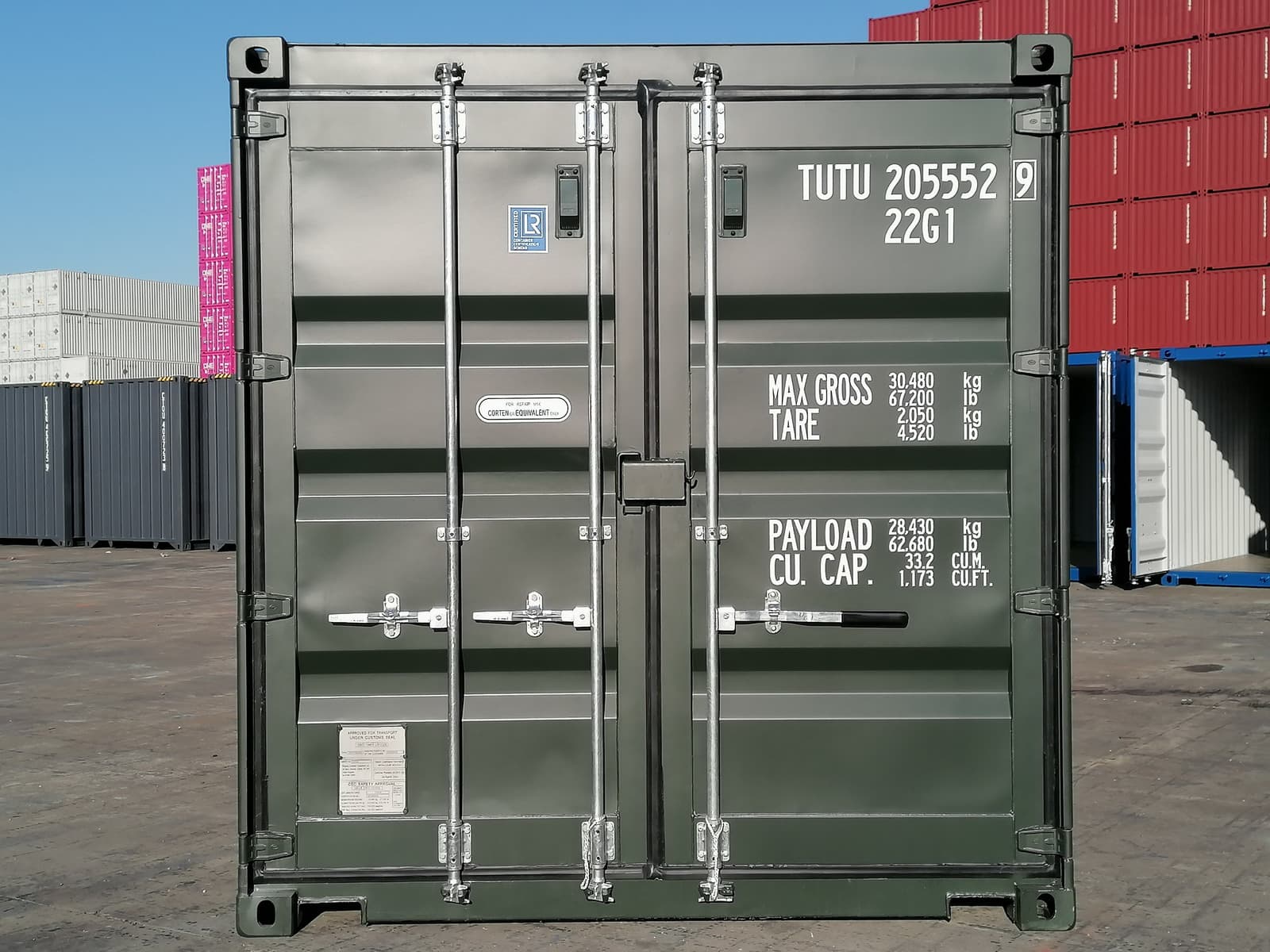
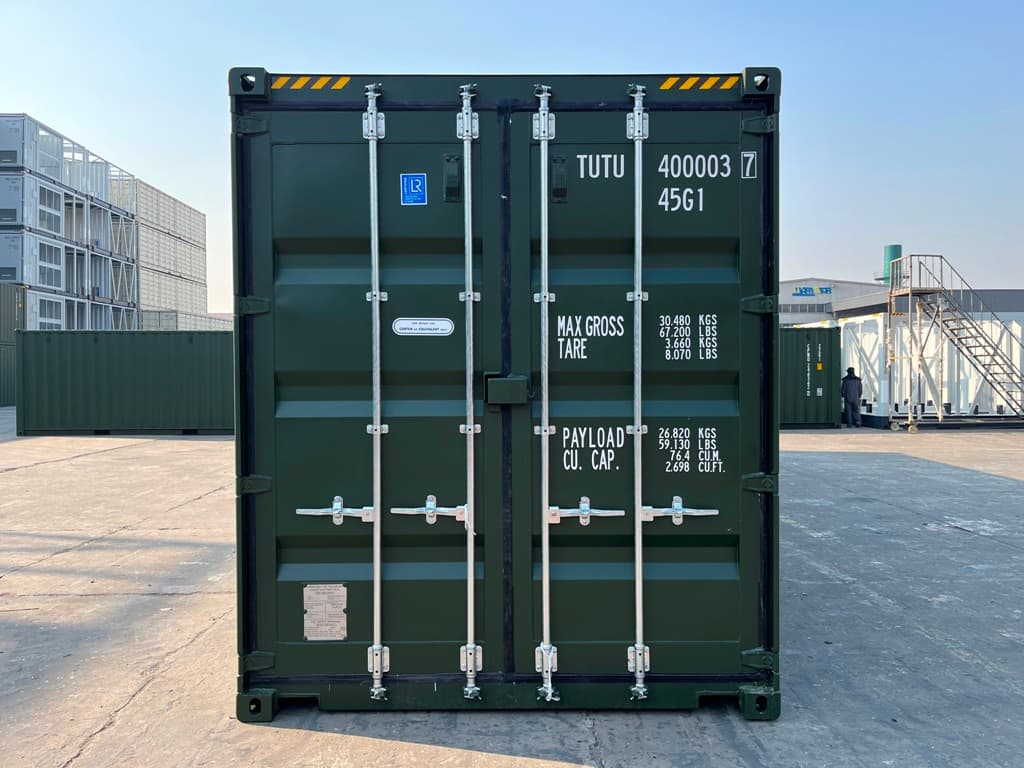
If, however, you order a pristine One-Trip container in RAL 6007 Bottle Green and place it neatly alongside a mature hawthorn hedgerow or behind an existing timber outbuilding, it blends so completely into the East Anglian countryside that passers-by barely register its existence. In our 40 years of logistics experience, choosing Bottle Green eliminates nine out of ten potential neighbour disputes before they begin.
6. Placing Containers on Domestic Property & Gardens
Can you put a 20ft container in your back garden? The answer depends on whether your home is in a residential settlement boundary and whether permitted development rights have been restricted.
Under Class E of Part 1 (domestic permitted development), you are allowed outbuildings and structures 'incidental to the enjoyment of the dwellinghouse'. However, strict limits apply: the container must not sit in front of the principal elevation of your house, must not exceed 2.5 metres in height within 2 metres of a boundary fence, and must not cover more than 50% of your garden area.
Because standard ISO containers measure 8ft 6in (2.59 metres) high, placing one right against a garden fence technically exceeds the 2.5m limit by 9 centimetres. If you need residential garden storage, consult our team: we can position the container further from the boundary or advise on cosmetic timber cladding.
7. Practical Steps for Rural Planning Compliance
If you are ordering a container for site or farm storage, follow these practical rules to ensure smooth sailing:
- Rule 1: Always order RAL 6007 Bottle Green if placing anywhere near a hedge, tree line, or open field to minimise visual impact.
- Rule 2: Keep the unit tucked behind existing barns, grain silos, or mature trees rather than proud in the center of an open meadow.
- Rule 3: Use treated timber railway sleepers or concrete pads under the corner castings to provide a level, well-ventilated base. (Note: placing containers on sleepers does not automatically exempt them from planning control).
- Rule 4: Avoid stacking containers two-high unless you operate a licensed commercial port or industrial yard.
- Rule 5: Check your position with your local planning authority before committing to a commercial project. Our desk can assist with preliminary satellite access checks for vehicle delivery.