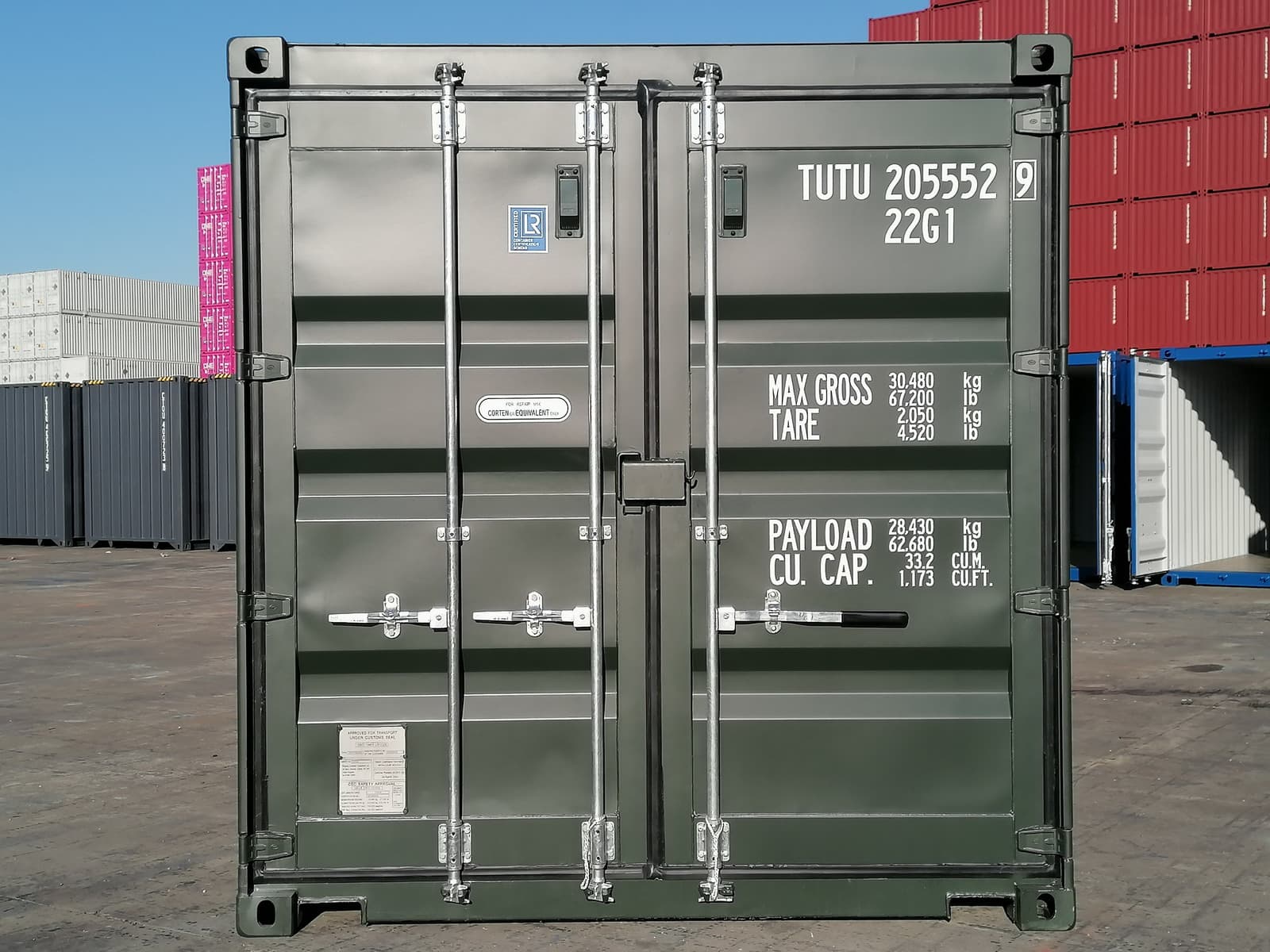
Farm Diversification: Navigating 2026 Tax Changes with Container Storage in East Anglia
Why progressive arable and livestock estates across Suffolk, Norfolk, and Essex are exploring relocatable self-storage compounds on redundant farm yards alongside the 2026 tax reforms.
Key Takeaways for East Anglian Site Managers
- Under the enacted Finance Act 2026, effective from 6 April 2026, 100% relief for qualifying agricultural property (APR) and business property (BPR) is available up to an aggregate allowance of £2.5 million, with 50% relief applying to qualifying property in excess of the available allowance.
- Shipping containers provide flexible, relocatable storage without the £100k+ commitment of permanent portal-frame barns, but commercial storage is a non-agricultural activity requiring independent planning and tax review.
- A 20-container farm compound occupying just a quarter-acre produces £33,600 in predictable gross annual rental revenue at an average of £140/month per unit.
- Pairing two 20ft containers on a single HIAB crane lorry cuts your delivery overhead from £400 to £280 (£120 immediate transport saving per pair).
1. The 2026 Agricultural Crossroads & Tax Context
For decades, the standard playbook for East Anglian family farms has been straightforward: farm the arable land, lease the cottage if you have one, and rely on Agricultural Property Relief (APR) to pass the agricultural acreage to the next generation without prohibitive inheritance tax liabilities.
Under the Finance Act 2026 (enacted and effective from 6 April 2026), 100% relief for qualifying agricultural property (APR) and business property (BPR) is subject to an aggregate statutory allowance of £2.5 million per qualifying estate or trust, with 50% relief applying to the value of qualifying property exceeding that allowance (giving an effective inheritance tax rate of 20% on the excess, assuming standard 40% rates). The £2.5 million allowance is apportioned across qualifying agricultural and business property in accordance with statutory rules, and rules apply regarding lifetime transfers, trusts, and transferable allowances between spouses. The allowance is not a blanket exemption for all rural assets; application depends on the specific ownership arrangements, transfers, and asset classifications.
Commercial containerised self-storage is one practical commercial diversification avenue. However, critical planning and tax distinctions must be understood: commercial self-storage is not an agricultural use and does not qualify for Agricultural Property Relief (APR), which is strictly restricted to land and buildings occupied for agricultural purposes. Furthermore, commercial self-storage does not automatically qualify as a trading business for Business Property Relief (BPR), nor does it categorically fail to qualify. Operating a storage facility can raise investment-business issues under section 105(3) of the Inheritance Tax Act 1984 (which excludes businesses consisting wholly or mainly of holding investments or letting property). Whether any particular enterprise qualifies for BPR depends entirely on the actual activities undertaken, the degree and nature of services provided to customers, the asset structure, and applicable statutory tests. Buying, owning, or installing shipping containers does not in itself confer, promise, or guarantee any inheritance tax relief. Container Consultants supplies storage equipment and logistics; we do not provide legal or tax advice. Always obtain bespoke guidance from a qualified chartered tax adviser or agricultural accountant.
Farm diversification and commercial storage can have tax implications. Eligibility for Agricultural Property Relief or Business Property Relief depends on the applicable legislation and the specific facts of the business, assets and ownership arrangements. Obtain advice from a suitably qualified tax adviser before making investment decisions. Shipping containers can provide practical storage for farms, estates and commercial sites. Whether you can install containers and operate a particular storage use depends on the site's planning history, location, existing lawful use and proposed activities. Agricultural permitted-development rights are subject to specific conditions and limitations. Commercial self-storage may require planning permission or other approvals. Check the position with your local planning authority before committing to a project.
2. Modular Storage vs Permanent Buildings: Capital Considerations
When farmers first consider commercial storage diversification, their traditional instinct is often to phone a local building fabricator and commission a 60ft x 40ft portal-framed steel barn. This is a substantial capital commitment.
Erecting a permanent steel barn in East Anglia routinely costs £80,000 to £120,000 once concrete foundations, roller shutters, and lighting are included. It requires full planning permission, may trigger community infrastructure levies, and permanently alters the property rating status of the holding.
In contrast, ISO shipping containers are relocatable, modular steel units. They sit on simple concrete pads or treated railway sleepers without permanent ground penetration. However, placing containers on sleepers does not confer an automatic exemption from planning control: whether permission is required depends on whether their placement and use amount to operational development or a material change of use. If farm operations require the yard back for harvest machinery, containers can be relocated or resold on the secondary market.
Capital Allowances & Plant Status
Where containers are acquired as plant and machinery for an active commercial enterprise, their capital cost may qualify for capital allowances such as the Annual Investment Allowance (AIA), subject to specific review by your qualified accountant based on your entity's tax status.
3. The Arithmetic of the 20-Unit Farm Compound
Let us examine the realistic financial mechanics of establishing a 20-unit self-storage compound on an unutilised farm yard. We will use real baseline siding figures direct from Felixstowe:
| Financial Line Item | Pure One-Trip (New) | Mixed Fleet (50% New / 50% Used) |
|---|---|---|
| Container Capital Cost (20 units) | £47,000 (20x £2,350) | £38,000 (10x £2,350 + 10x £1,450) |
| HIAB Crane Haulage (10 paired loads) | £2,800 (10x £280) | £2,800 (10x £280) |
| Ground Prep (40 railway sleepers) | £1,200 | £1,200 |
| Automated Gate & CCTV Hardware | £3,500 | £3,500 |
| Total Turnkey Capital Outlay | £54,500 ex. VAT | £45,500 ex. VAT |
| Monthly Gross Rent @ £140/unit (85% occ.) | £2,380 / month | £2,380 / month |
| Annual Gross Cash Flow | £28,560 / year | £28,560 / year |
| Estimated Capital Payback Period | 19.8 Months | 15.9 Months |
| 5-Year Projected Net Cash Flow | £88,300 profit | £97,300 profit |
4. The Behavioural Psychology of the Rural Storage Customer
In advertising and behavioural science, Rory Sutherland often reminds us that consumers do not evaluate price in a vacuum; they evaluate the relative psychological relief that a solution provides.
When a couple sells a four-bedroom house in Woodbridge or Norwich and finds their new cottage completion delayed by three months, corporate self-storage operators on industrial estates charge them £280 to £350 per month for a draughty indoor locker, plus mandatory insurance and convoluted access codes.
When they discover a secure, tidy farm compound five minutes down a quiet B-road offering direct drive-up access to a pristine RAL 6007 Bottle Green container for £140 per month, it does not feel merely cheaper — it feels like a glorious discovery. They can reverse their Ford Ranger right up to the double doors, lock it with their own insurance-approved padlock inside a welded lockbox, and drive away feeling completely in control.
5. Converting Silage Clamps & Grain Aprons: Ground Prep
The ideal footprint for a farm container park is an existing concrete apron — such as a decommissioned silage clamp, a disused beet pad, or a tractor wash-down area. Concrete offers infinite ground-bearing capacity for our 32-tonne HIAB lorries.
If your target site is compacted road scalpings or hardcore, ensure the surface is well-rolled with cross-fall drainage so rainwater does not pool underneath the container floors. Never place containers directly onto bare agricultural soil or soft grass: dampness wicks up into the 28mm hardwood floor, and uneven settlement will rack the door frame.
Simply set down four treated timber railway sleepers — one across each end supporting the four corner casting posts. The container bridges the span naturally, allowing continuous airflow beneath the subfloor.
6. Fleet Procurement: Why One-Trip RAL 6007 Green Dominates
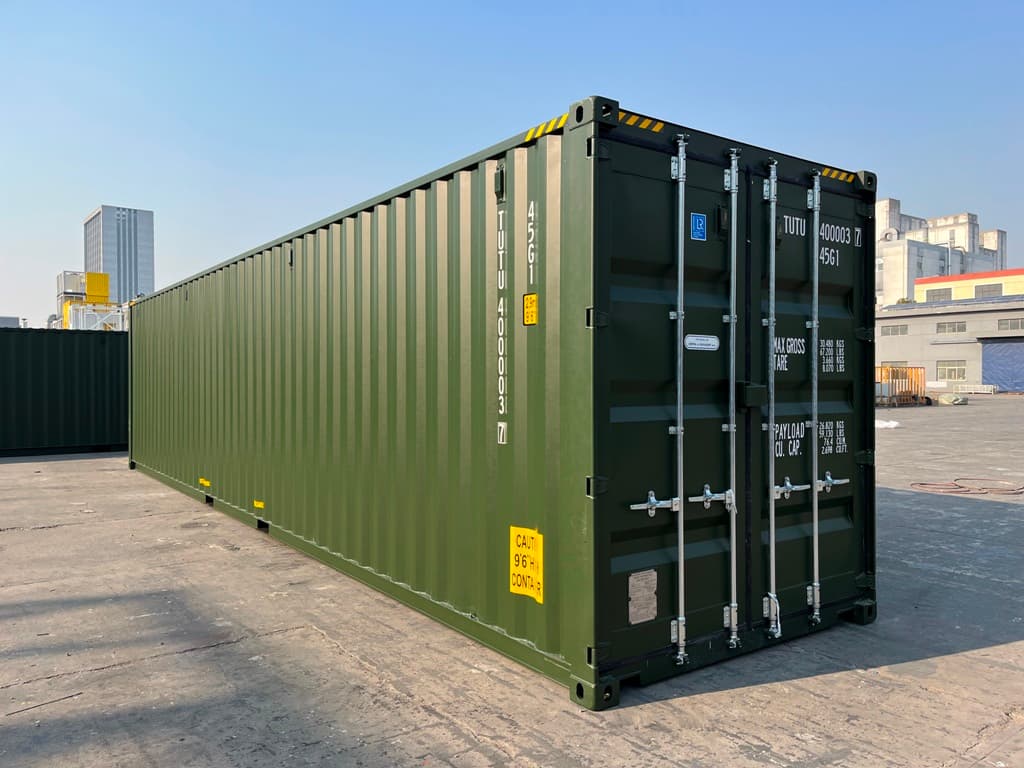
For commercial self-storage yards where the public will be visiting, 80% of your fleet should be pristine One-Trip containers finished in RAL 6007 Bottle Green. Here is why:
• Rural Planning Aesthetics: Bottle Green merges seamlessly against hawthorn hedgerows and agricultural tree lines, satisfying local planning officers across Mid-Suffolk, South Norfolk, and Babergh.
• Factory-Fitted Padlock Lockboxes: Essential for insurance underwriting. The heavy steel shroud encases the customer's high-security padlock, preventing attacks by bolt-cutters or angle grinders.
• Grafo-therm Anti-Condensation Treatment: Applied to internal roof panels, this microporous coating controls humidity cycles during cold weather, helping protect furniture and boxed goods from condensation drips.
7. 5-Step Farm Diversification Plan
If you are considering turning an acre of under-utilised yard into a high-yielding storage park for 2026, here is our battle-tested operational sequence:
- Step 1: Audit your entrance gate dimensions against preliminary screening baselines (indicative 3.2m for rigid HIAB and 3.5m for articulated lorries on straight approaches only; wider access is essential when turning from narrow lanes) and verify overhead travel clearance (minimum 4.5m / 14ft 9in).
- Step 2: Send entrance coordinates to our logistics team on Head Office: 01449 744951 or Direct: 07879 841 007 for a preliminary route and access check (please note: satellite checks do not constitute a site lifting assessment or lift plan).
- Step 3: Level your ground using compacted hardcore and lay railway sleepers on the four corner bearing points to provide a clean, ventilated base.
- Step 4: Order your initial batch in paired quantities of 2, 4, or 6 to capitalise on our £280 shared lorry haulage rate (saving £120 per lorry).
- Step 5: Put up a clean wooden entrance sign on your boundary road, list your facility on local Facebook community groups, and watch the bays fill within 60 days.